Sensitivity refers to the ability of a test to designate an individual with a disease as positive. Specificity refers to the ability of a test to designate an individual without a disease as negative.
False positives are then the complement/opposite of specificity and false negatives are the complement/opposite of sensitivity.
Truth
Positive Test
Negative Test
Positive
Sensitivity
False Negative
Negative
False Positive
Specificity
Examples:
Drug testing
Diagnostic testing
Applied to Hypothesis Testing
When we get to hypothesis testing in a few weeks, this comes up again with null and alternative hypotheses and the related decision.
Truth
Reject Null
Accept Null
Alternative
Correct
Type II error
Null
Type I error
Correct
A COVID test
Suppose a COVID test is 0.99 sensitive and 0.95 specific. At the time of administration, it is thought that roughly twelve percent of the population is infected.
What proportion of tests are positive?
Two positive tests:
True positives 0.99*0.12=0.1188 and
False positives 0.05*0.880=.044;
sum 0.1628.
What is the probability that a person with a positive test is infected?
Of .1628 positive tests, 0.1188 come from the infected:
\frac{0.1188}{0.1628} = 0.7297
Two Further Issues in Probability
Juries and Bayes Rule
Counting Rules
Counting Rules
Simple counting rules, k questions [True/False, n=2]: N^k
Multi-step experiments: Whataburger
Factorial designs
Combinations and permutations
Whataburger
Texas Fast Food Chain says there are 36,864 to order a Whataburger. How? - 2 burger patties (Regular, Junior) up to triple meat (R,J,RJ,RR,JJ,RRR,JJJ,RJJ,JRR) - 4 bread options - 3 condiments (mayonnaise, mustard, ketchup) - Vegetables (lettuce, tomato, pickle, onion) - Cheese, jalapeno, bacon 9*4*(1+3+3+1)*(1+4+6+4+1)*(1+3+3+1)
Just like the t-shirts say, 36,864 ways to make a whataburger!
Six students wish to meet with a professor… - Alice, Bob, Cat, Dharma, Ernest, Fred How many arrangements of the meetings into six slots? - Six ways for the first slot (ABCDEF) - Five ways for the second (whomever is not first) - Four ways for the third, and so on….
6*5*4*3*2*1=720
Permuations and Combinations
The key difference is whether or not the order matters. Permutations deem order as relevant whereas combinations do not. There are (at least as many or) more permutations than combinations.
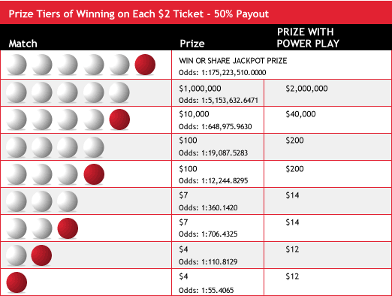
Is the Powerball lottery a permutation or a combination?
What about a seating chart for this class?
Powerball
59 white balls numbered 1 through 59
35 red balls numbered 1 through 35
Choose 5 white balls and one red ball.
Calculating (old) Powerball
Order doesn’t matter for the chooser, you choose six numbers (five white, one red)
Then just apply the formula for combinations (but we need to account for the 35 red balls).
_nC_x = \frac{n!}{x!(n-x)!} = \frac{59!}{5!54!}
So the chances of winning the lottery are just a combinations problem with a second-step.
I do not love the book definition of this. Technically, it is a variable whose values are generated according to some random process; your book implies that these are limited to quantities.
It is really a measurable function defined on a probability space that maps from the sample space [the set of possible outcomes] to the real numbers.
A Core Idea: Independence
What does it mean to say something is independent of something else?
The simplest way to think about it is, “do I learn something more about x by knowing y than not”. If two things are independent, I don’t need to care about y if x is my objective.